
What is a Manual Invoice?
Manual invoices represent traditional billing methods, utilizing physical documents or basic templates for transactions, offering a tangible record of sales and services rendered.
Definition and Purpose
A manual invoice is a bill created and sent to a customer without the aid of invoicing software or automated systems. Historically, these were entirely handwritten, but today often involve filling out pre-printed forms or utilizing basic word processing templates. The primary purpose of a manual invoice is to formally request payment for goods or services provided.
It serves as a detailed record of the transaction, outlining what was sold, the quantity, agreed-upon prices, and the total amount due. Crucially, it establishes a clear contractual obligation for the buyer to remit payment to the seller. Manual invoices are particularly useful for businesses with infrequent or one-off transactions, or those preferring a more personalized approach to billing. They provide a straightforward, albeit potentially time-consuming, method for managing receivables and maintaining financial records.
Why Use a Manual Invoice?
Despite the rise of digital solutions, several reasons support utilizing manual invoices. For businesses with a low volume of invoices, the cost and complexity of invoicing software may outweigh the benefits. Manual invoicing offers a simple, direct approach without ongoing subscription fees or implementation hurdles.
Furthermore, some businesses value the personal touch a manually created invoice provides, fostering stronger customer relationships. In situations with limited internet access or technical infrastructure, manual invoicing remains a reliable option. It also grants complete control over invoice design and content, allowing for customization beyond standard software templates. Finally, for specific industries or clients who prefer traditional methods, a manual invoice can demonstrate a willingness to accommodate their preferences, building trust and goodwill.

Essential Elements of a Manual Invoice
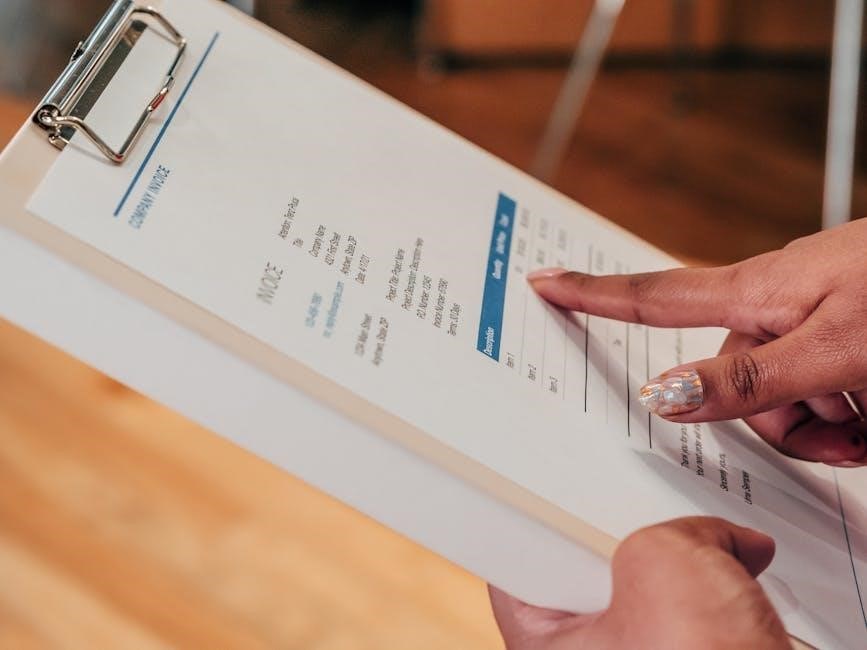
Essential elements include a unique invoice number, issue and due dates, detailed seller and buyer information, and a clear description of goods or services provided.
Invoice Numbering System

Establishing a consistent invoice numbering system is crucial for accurate tracking and organization. A sequential system, simply incrementing numbers (001, 002, 003), is common and easy to implement. However, incorporating the year or month into the number (2026-001, 04-001) provides better clarity and simplifies archiving.
Avoid gaps in the sequence, as they can create confusion during reconciliation. If an invoice is voided, clearly mark it as “VOID” and retain it for record-keeping. Some businesses utilize prefixes or suffixes to categorize invoices by client, project, or invoice type. For example, “CL-001” for a client invoice or “PRJ-001” for a project-specific invoice.
A well-defined system facilitates efficient retrieval, minimizes errors, and supports effective financial management, especially when dealing with a high volume of manual invoices. It also aids in auditing and tax compliance.
Date of Issue and Due Date
Clearly stating the date of issue on a manual invoice is fundamental for establishing a timeline for payment. This date signifies when the invoice was created and sent to the client. Equally important is the due date, which specifies the timeframe within which payment is expected. Common payment terms include Net 30 (payment due within 30 days), Net 15, or immediate payment upon receipt.
Specify the due date explicitly – for example, “Due Date: April 29, 2026.” Consider offering early payment discounts to incentivize prompt settlement. Late payment penalties, if applicable, should also be clearly outlined on the invoice to avoid disputes. Accurate dating ensures proper accounting and helps manage cash flow effectively.
Consistent application of these dates across all invoices maintains professionalism and fosters positive client relationships.
Seller and Buyer Information
Accurate identification of both the seller (your business) and the buyer (your client) is crucial on any manual invoice. The seller’s information should include the complete business name, address, contact phone number, and email address. Including a logo can enhance professionalism and brand recognition. For the buyer, record their full name or company name, address, and contact details.
This information facilitates clear communication regarding the invoice and ensures proper record-keeping for both parties. Verify the buyer’s details to avoid errors that could delay payment. A complete and correct record minimizes disputes and streamlines the invoicing process.
Properly identifying both parties establishes a legally sound transaction record.

Creating a Manual Invoice: Step-by-Step
Initiate the process by selecting a suitable template or crafting your own, then meticulously populate it with all necessary details for a clear transaction record.
Choosing a Template or Creating Your Own
Selecting a pre-designed template offers convenience and ensures all essential fields are included, streamlining the invoice creation process. Numerous free templates are available online, catering to various industries and aesthetic preferences. However, these might lack customization options.
Alternatively, crafting your own invoice provides complete control over the layout and branding. This approach is ideal for businesses with unique requirements or a strong brand identity. You can utilize word processing software or spreadsheet programs to design a professional-looking invoice.
Consider key elements when designing: a clear heading, your company logo, contact information, invoice number, date, a detailed description of goods or services, quantities, unit prices, total amount due, and payment terms. A well-structured invoice minimizes confusion and facilitates prompt payment. Remember to save your custom template for future use, ensuring consistency in your billing practices.
Filling in the Invoice Details
Accurately populate each field of your chosen invoice template. Begin with the unique invoice number and the date of issue, crucial for tracking and record-keeping. Clearly state your company’s name, address, and contact information, alongside the client’s corresponding details.
Provide a detailed description of each product or service rendered, including quantity, unit price, and any applicable discounts. Ensure descriptions are specific enough to avoid ambiguity. Itemize each entry for clarity and transparency.
Double-check all entries for accuracy before finalizing the invoice. Errors can lead to payment delays or disputes. A professional and error-free invoice reflects positively on your business and fosters trust with your clients. Consistent and detailed information is paramount for smooth transactions.
Calculating Totals and Taxes
After itemizing all products or services, meticulously calculate the subtotal by summing the extended price of each line item (quantity multiplied by unit price). This subtotal forms the base for tax calculations, which must adhere to local and national tax regulations.
Determine the applicable tax rate based on the location of your business and the type of goods or services provided. Accurately calculate the tax amount and add it to the subtotal to arrive at the total invoice amount. Clearly display both the tax amount and the total amount due.
Verify your calculations to avoid discrepancies. Incorrect totals can cause payment issues and damage client relationships. A clearly presented and accurate total instills confidence and ensures a smooth payment process. Double-checking is essential for financial accuracy.

Manual Invoice vs. Digital Invoicing
Comparing methods, manual invoicing relies on physical documents, while digital invoicing utilizes software for automated creation, sending, and tracking of invoices efficiently.
Advantages of Digital Invoicing
Digital invoicing presents a multitude of benefits over traditional manual methods. Firstly, it significantly enhances efficiency, automating invoice creation and delivery, reducing time spent on administrative tasks. This automation minimizes errors inherent in manual data entry, improving accuracy and reducing disputes.
Furthermore, digital invoices facilitate faster payment cycles. Electronic delivery ensures prompt receipt, and integrated payment gateways allow for immediate online payments. This quicker turnaround improves cash flow for businesses. Digital systems also offer superior tracking capabilities, providing real-time visibility into invoice status – sent, viewed, paid, or overdue.
Cost savings are another key advantage, eliminating expenses associated with paper, printing, postage, and physical storage. Digital invoices are also more environmentally friendly, reducing paper consumption. Finally, integration with accounting software streamlines financial management, simplifying reconciliation and reporting processes, offering a comprehensive overview of financial health.
Disadvantages of Manual Invoicing
Manual invoicing, while seemingly straightforward, carries several drawbacks in today’s business landscape. A primary disadvantage is its time-consuming nature; creating, sending, and tracking invoices manually demands significant administrative effort. This process is prone to human error, from calculation mistakes to incorrect data entry, potentially leading to disputes and delayed payments.
Furthermore, manual systems lack the scalability of digital solutions. As a business grows, managing an increasing volume of paper invoices becomes increasingly challenging. Tracking payments is also more difficult, requiring manual record-keeping and increasing the risk of missed or late payments.

The reliance on physical documents introduces risks of loss or damage, and retrieval of specific invoices can be cumbersome. Manual processes also contribute to higher operational costs due to paper, printing, postage, and storage expenses. Finally, integration with accounting software is often limited or non-existent, hindering efficient financial management.

Legal Considerations for Manual Invoices
Manual invoices must adhere to legal standards, including accurate record-keeping for audits and strict compliance with applicable tax regulations and reporting requirements.
Record Keeping Requirements
Maintaining meticulous records is paramount when utilizing manual invoices. Businesses are legally obligated to retain copies of all invoices issued and received for a specified period, typically several years, to facilitate audits and demonstrate financial transparency.
These records should include not only the physical invoice itself but also any supporting documentation, such as purchase orders, delivery notes, and payment confirmations. A well-organized filing system, whether physical or digital (through scanning), is crucial for efficient retrieval during audits.
Specific retention periods vary depending on local tax laws and regulations, so it’s essential to consult with a legal or accounting professional to ensure compliance. Proper record-keeping safeguards against potential penalties and demonstrates responsible financial management, building trust with both tax authorities and business partners.
Compliance with Tax Regulations
Adhering to tax regulations is critical when employing manual invoicing. Invoices must accurately reflect all applicable taxes, such as sales tax or VAT, calculated correctly based on the relevant tax rates and jurisdictions. Businesses must register for tax identification numbers and include them prominently on all invoices.
Failure to comply with tax regulations can result in penalties, fines, and legal repercussions. It’s vital to stay updated on changing tax laws and ensure invoicing practices align with current requirements. Accurate record-keeping, as previously discussed, is fundamental to demonstrating tax compliance during audits.
Consulting with a tax professional is highly recommended to navigate the complexities of tax regulations and ensure invoices meet all necessary legal standards, minimizing risk and fostering a responsible business operation.

Best Practices for Manual Invoice Management
Effective management involves meticulous organization, prompt filing, and consistent payment tracking to maintain financial clarity and streamline the invoicing workflow efficiently.
Organization and Filing

Maintaining a well-organized filing system is paramount when dealing with manual invoices. Implement a clear and consistent method for storing both sent and received invoices. Consider utilizing physical filing cabinets with labeled folders categorized by date, client name, or invoice number – whichever system best suits your business needs.
Digital scanning of paper invoices is highly recommended, creating a backup and facilitating easier searching. Ensure scanned files are named logically and stored in a structured folder hierarchy on your computer or a secure cloud storage service. Regularly back up your digital files to prevent data loss.
A chronological order within each folder is beneficial, allowing for quick retrieval of specific invoices. Develop a routine for archiving older invoices according to legal record-keeping requirements, ensuring easy access when needed for audits or tax purposes. Proper organization minimizes errors and saves valuable time.
Tracking Payments
Diligent payment tracking is crucial when using manual invoices, as it requires a more hands-on approach than automated systems. Maintain a separate record – a spreadsheet or ledger – detailing each invoice number, date issued, amount due, payment date, and payment method. Regularly update this record as payments are received.
Immediately mark invoices as “Paid” upon receipt of payment, either physically on the invoice itself or within your tracking system. Follow up promptly on overdue invoices, sending reminders to clients as necessary. Keep records of all communication regarding payment, including emails and phone calls.
Reconcile your invoice tracking record with your bank statements monthly to ensure all payments have been accurately recorded. This process helps identify any discrepancies and maintain accurate financial records, providing a clear overview of outstanding debts and cash flow.