CompTIA Network+ (9th Edition), authored by Jill West, is a comprehensive guide, enhanced by MindTap, fostering mastery of networking concepts and practical skills․
Overview of the CompTIA Network+ Certification
The CompTIA Network+ certification validates essential networking skills, proving competency in network installation, configuration, and troubleshooting․ The 9th Edition guide, by Jill West, prepares candidates for the N10-008 exam․
This certification demonstrates a foundational understanding of networking concepts, covering topics like network topologies, protocols, and security․
MindTap, integrated with the guide, offers interactive learning experiences, solidifying knowledge and boosting exam confidence․ It’s a crucial step for aspiring IT professionals․
Importance of Networking Fundamentals
Networking fundamentals are paramount in today’s interconnected world, forming the backbone of communication and data exchange․ The CompTIA Network+ (9th Edition), authored by Jill West, emphasizes these core principles․
A strong grasp of networking enables effective problem-solving, efficient network management, and robust security implementation․
Understanding protocols, topologies, and addressing schemes, as detailed in the guide, is vital for any IT career path, powering students from memorization to mastery․

Networking Concepts
CompTIA Network+ (9th Edition) delves into essential concepts like the OSI model, TCP/IP, network topologies, and types, building a solid foundation․
OSI Model and TCP/IP Model
CompTIA Network+ (9th Edition) meticulously examines the Open Systems Interconnection (OSI) model, detailing its seven layers and functions – from physical to application․
Furthermore, it contrasts this with the TCP/IP model, a practical four-layer framework driving internet communication․ Understanding both models is crucial for troubleshooting and comprehending data encapsulation․
The guide clarifies how data travels across networks, highlighting the protocols operating at each layer, and their respective roles in ensuring reliable data transmission․
Network Topologies (Bus, Star, Ring, Mesh)
CompTIA Network+ (9th Edition) provides a detailed exploration of fundamental network topologies – Bus, Star, Ring, and Mesh – outlining their unique characteristics and practical applications․
The guide analyzes the advantages and disadvantages of each topology, considering factors like cost, scalability, fault tolerance, and ease of management․
It illustrates how these topologies impact network performance and security, preparing candidates to identify and troubleshoot topology-related issues effectively․
Network Types (LAN, WAN, MAN)
CompTIA Network+ (9th Edition) thoroughly examines distinct network types: Local Area Networks (LANs), Wide Area Networks (WANs), and Metropolitan Area Networks (MANs), detailing their scope and functionalities․
The guide clarifies the differences in geographical coverage, transmission speeds, and technologies employed by each network type, providing real-world examples․
It emphasizes how these network types interconnect to form the global internetwork, preparing candidates for comprehensive network design and troubleshooting scenarios․
Network Hardware
CompTIA Network+ (9th Edition) details essential hardware – routers, switches, NICs, and cabling – crucial for network functionality and data transmission, as covered in the guide․
Routers and Their Functions
Routers, as detailed in CompTIA Network+ (9th Edition), are fundamental network devices responsible for directing data packets between networks․ They analyze destination IP addresses to determine the optimal path for data transmission․
Key functions include network address translation (NAT), enabling multiple devices to share a single public IP address, and providing security through firewall capabilities․ Routers also support various routing protocols, dynamically learning network topologies and adapting to changes․
Understanding router configuration and troubleshooting is vital for network professionals, and the guide provides extensive coverage of these aspects․
Switches and Their Functions
Switches, as covered in CompTIA Network+ (9th Edition), operate at the data link layer, forwarding data packets based on MAC addresses within a local network․ Unlike hubs, switches create dedicated connections, improving network performance and reducing collisions․
Key functions include MAC address learning, VLAN support for network segmentation, and Quality of Service (QoS) for prioritizing traffic․ Managed switches offer advanced features like port mirroring and Spanning Tree Protocol (STP) for redundancy․
The guide details switch configuration and troubleshooting techniques․
Network Interface Cards (NICs)
Network Interface Cards (NICs), detailed in CompTIA Network+ (9th Edition), are essential components enabling devices to connect to a network․ They provide the physical layer interface, converting data into signals suitable for transmission media like Ethernet cables or wireless signals․
NICs possess unique MAC addresses for identification, and support various network speeds and standards․ Modern NICs often include features like auto-negotiation and wake-on-LAN․
The guide explains NIC configuration and troubleshooting within network environments․
Cables and Connectors (Ethernet, Fiber Optic)
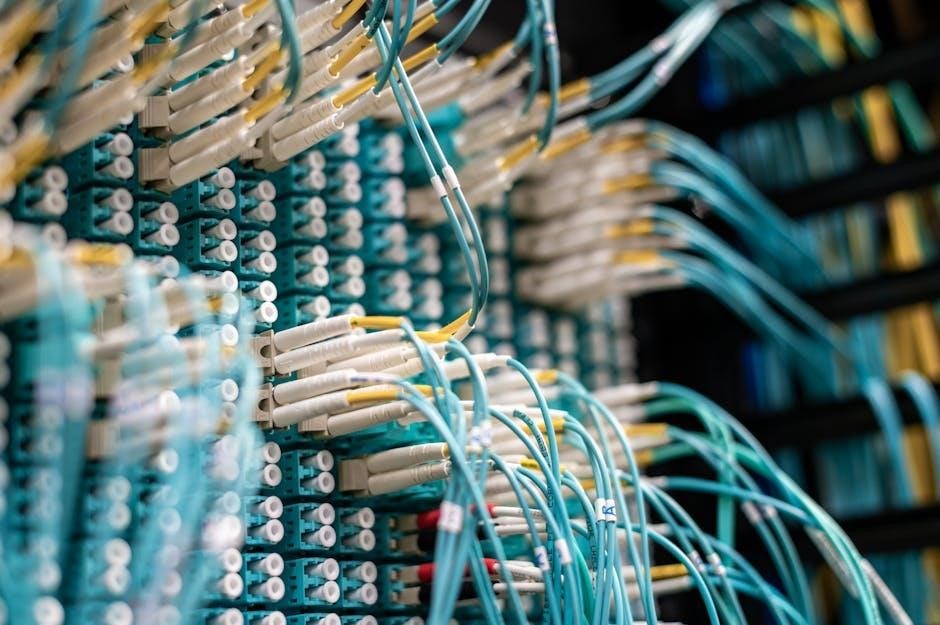
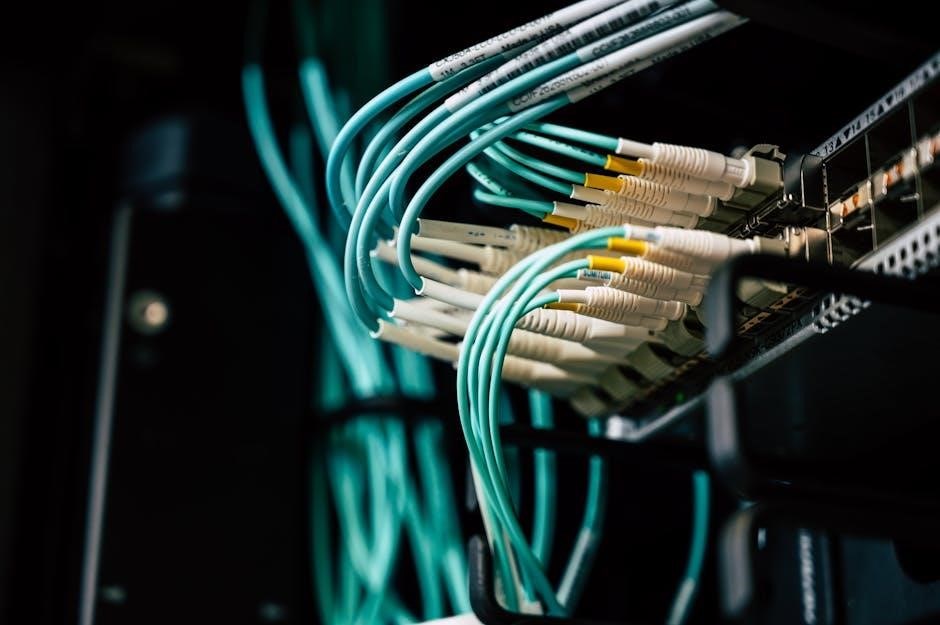
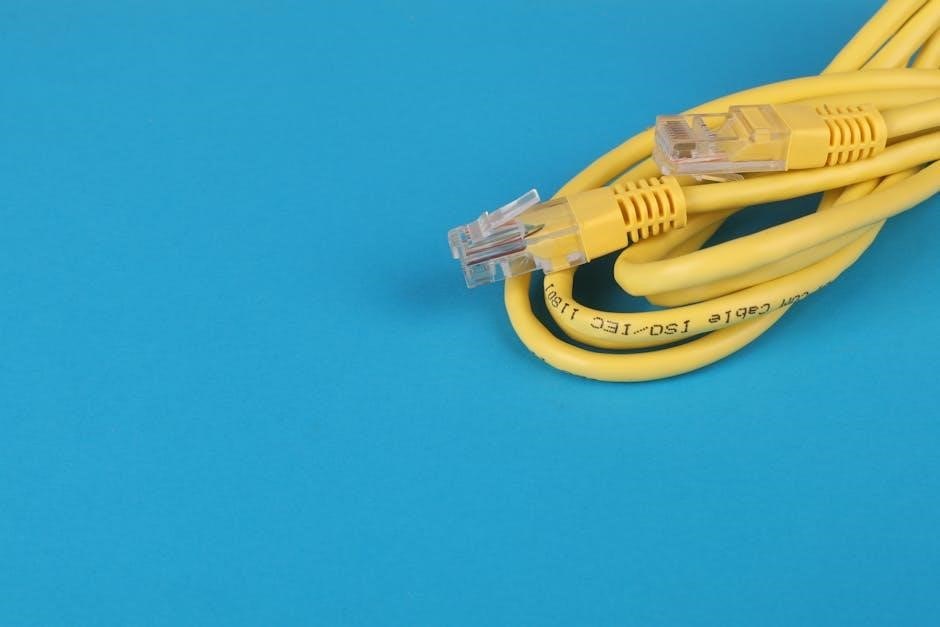
CompTIA Network+ (9th Edition) thoroughly covers cabling, a foundational networking element․ Ethernet cables, like Cat5e and Cat6, utilize RJ45 connectors for common network connections, supporting varying bandwidths and distances․ Fiber optic cables, employing LC or SC connectors, transmit data as light, offering higher speeds and longer distances․
The guide details cable types, connector standards, and best practices for installation and troubleshooting, crucial for reliable network performance․
Network Protocols
CompTIA Network+ (9th Edition) details essential protocols like TCP/IP, DNS, DHCP, and FTP, explaining their functions and importance in network communication and data transfer․
TCP/IP Protocol Suite
The TCP/IP protocol suite, a foundational element covered in CompTIA Network+ (9th Edition), is the backbone of modern internet communication․ This suite encompasses various protocols working in concert, including IP for addressing and routing, TCP for reliable data transmission, and UDP for faster, less reliable transfers․
Understanding the layered model – Application, Transport, Internet, and Network Access – is crucial․ The guide details how data encapsulation and de-encapsulation occur as information travels through these layers, ensuring effective network functionality and troubleshooting capabilities․
DNS (Domain Name System)
DNS (Domain Name System), thoroughly explained within CompTIA Network+ (9th Edition), translates human-readable domain names – like example․com – into IP addresses that computers use to locate each other on the network․ This hierarchical and distributed system relies on resolvers, root servers, TLD servers, and authoritative name servers to efficiently map names to addresses․
The guide details the DNS query process, record types (A, MX, CNAME), and the importance of DNS for network accessibility and functionality, crucial for certification success․
DHCP (Dynamic Host Configuration Protocol)
DHCP (Dynamic Host Configuration Protocol), as detailed in CompTIA Network+ (9th Edition), automates the assignment of IP addresses and other network configuration parameters to devices․ This eliminates manual configuration, reducing errors and simplifying network administration․ The guide explains the DORA process – Discover, Offer, Request, Acknowledge – outlining how devices obtain IP addresses from a DHCP server․
Understanding DHCP scopes, reservations, and lease times is vital, preparing candidates for exam questions and real-world network management scenarios․
FTP (File Transfer Protocol)
FTP (File Transfer Protocol), covered within the CompTIA Network+ (9th Edition), is a standard network protocol used for transferring files between a client and a server on a TCP/IP network․ The guide details FTP’s operation, including its reliance on separate control and data connections․ It highlights the inherent security risks of traditional FTP due to unencrypted transmissions․
The text emphasizes the importance of secure alternatives like SFTP and FTPS, preparing candidates for understanding file transfer security best practices․

Network Addressing
CompTIA Network+ (9th Edition) thoroughly explores IPv4 and IPv6 addressing, alongside subnetting techniques, crucial for efficient network design and management․
IPv4 Addressing
IPv4 addressing, a cornerstone of networking, is extensively covered in CompTIA Network+ (9th Edition)․ The guide details the structure of IPv4 addresses, including their dotted decimal notation, and explains the significance of network and host portions․
It delves into public versus private IP addresses, address classes (A, B, C), and the concept of reserved address ranges․ Understanding IPv4 is vital for configuring network devices and troubleshooting connectivity issues, as emphasized throughout the text․ The book provides practical examples and scenarios to solidify comprehension․
IPv6 Addressing
CompTIA Network+ (9th Edition) dedicates significant attention to IPv6 addressing, the successor to IPv4, crucial for the future of networking․ The guide explains the hexadecimal notation of IPv6 addresses and the benefits of its expanded address space, resolving IPv4 exhaustion concerns․
It covers IPv6 address types – unicast, multicast, and anycast – and explores concepts like autoconfiguration and stateless address assignment․ Practical examples and comparisons with IPv4 are provided, ensuring a solid understanding of this increasingly important networking protocol․
Subnetting
CompTIA Network+ (9th Edition) thoroughly explains subnetting, a vital skill for efficient network management․ The guide details how to divide a network into smaller subnetworks, optimizing performance and security․ It covers the process of determining network and host portions of an IP address using subnet masks․
Practical exercises and real-world examples are included, enabling students to confidently calculate subnetworks, usable host ranges, and broadcast addresses․ Understanding subnetting is presented as fundamental for effective network design and troubleshooting․

Wireless Networking
CompTIA Network+ (9th Edition) details Wi-Fi standards (802․11 a/b/g/n/ac/ax) and wireless security protocols (WEP, WPA, WPA2, WPA3) for secure network configurations․
Wi-Fi Standards (802․11 a/b/g/n/ac/ax)
CompTIA Network+ (9th Edition) comprehensively covers the evolution of Wi-Fi standards․ 802․11a, b, and g represent older technologies, while 802․11n brought improved speed and range․
Further advancements include 802․11ac, offering gigabit speeds, and the latest 802․11ax (Wi-Fi 6) providing enhanced efficiency in dense environments․
Understanding these standards is crucial for network professionals, as each offers different capabilities regarding frequency, bandwidth, and overall performance, impacting network design and troubleshooting․
Wireless Security Protocols (WEP, WPA, WPA2, WPA3)
CompTIA Network+ (9th Edition) details the progression of wireless security․ WEP, the earliest standard, is now considered highly insecure due to vulnerabilities․ WPA offered improvements, but WPA2 became the standard for many years, utilizing stronger encryption․
However, WPA2 also faced vulnerabilities, leading to the development of WPA3․
WPA3 provides enhanced security features like Simultaneous Authentication of Equals (SAE), offering better protection against password cracking and bolstering overall wireless network security․
Wireless Network Configuration
CompTIA Network+ (9th Edition) covers essential wireless network configuration aspects․ This includes setting the Service Set Identifier (SSID), which is the network name, and choosing an appropriate wireless channel to minimize interference․
Securing the network with a strong password or passphrase is crucial․
Understanding concepts like wireless modes (802․11 a/b/g/n/ac/ax) and configuring access control lists (ACLs) are also vital for establishing a robust and secure wireless environment․
Network Security
CompTIA Network+ (9th Edition) details vital security measures, including firewalls, intrusion prevention, and VPNs, to safeguard networks against evolving cyber threats․
Firewalls
Firewalls are a cornerstone of network security, as detailed in CompTIA Network+ (9th Edition)․ They act as barriers, controlling network traffic based on pre-defined security rules․ This crucial component examines incoming and outgoing data, blocking potentially harmful connections and allowing legitimate communication․
The guide explains different firewall types – packet filtering, stateful inspection, and next-generation firewalls – and their respective strengths․ Understanding firewall configuration and management is essential for protecting networks from unauthorized access and malicious attacks, a key focus of the certification․
Intrusion Detection and Prevention Systems (IDS/IPS)
Intrusion Detection and Prevention Systems (IDS/IPS), covered extensively in CompTIA Network+ (9th Edition), are vital for proactive network security․ IDS monitors network traffic for suspicious activity, alerting administrators to potential threats․ IPS goes a step further, actively blocking malicious traffic and preventing intrusions․
The guide details the differences between signature-based and anomaly-based detection methods․ Proper configuration and tuning of IDS/IPS are crucial to minimize false positives and ensure effective threat mitigation, a core skill for network professionals․
VPNs (Virtual Private Networks)
Virtual Private Networks (VPNs), a key component of network security detailed in CompTIA Network+ (9th Edition), create secure connections over public networks like the internet․ They encrypt data transmission, protecting confidentiality and integrity․ The guide explains various VPN protocols, including IPsec, SSL/TLS, and WireGuard, outlining their strengths and weaknesses․
Understanding VPNs is crucial for enabling secure remote access and establishing site-to-site connectivity, essential skills for modern network administrators seeking robust security solutions․

Network Troubleshooting
CompTIA Network+ (9th Edition) equips learners with essential troubleshooting skills, utilizing tools like Ping and Traceroute to diagnose and resolve common network issues․
Common Network Problems
CompTIA Network+ (9th Edition) delves into prevalent network challenges, preparing individuals to effectively address connectivity issues․ These encompass problems like slow network performance, intermittent connections, and complete network outages․
The guide explores difficulties with DNS resolution, DHCP failures preventing IP address assignment, and wireless interference impacting signal strength․ It also covers issues related to cabling, hardware malfunctions, and security breaches, providing a foundation for systematic troubleshooting and resolution․ Understanding these common problems is crucial for network administrators․
Troubleshooting Tools (Ping, Traceroute, Ipconfig/Ifconfig)
CompTIA Network+ (9th Edition) emphasizes proficiency with essential troubleshooting tools․ Ping verifies network connectivity by sending echo requests, while Traceroute maps the path packets take to a destination, identifying potential bottlenecks․
Ipconfig (Windows) and Ifconfig (Linux/macOS) display network configuration details like IP address, subnet mask, and default gateway․ Mastering these commands allows technicians to diagnose network issues efficiently, pinpointing the source of problems and implementing effective solutions for optimal network performance․
Cloud Computing and Networking
CompTIA Network+ (9th Edition) explores cloud service models – IaaS, PaaS, and SaaS – and their impact on networking, including virtualization technologies․
Cloud Service Models (IaaS, PaaS, SaaS)
CompTIA Network+ (9th Edition) details Infrastructure as a Service (IaaS), providing virtualized computing resources over the internet․ Platform as a Service (PaaS) offers a complete development and deployment environment in the cloud․ Software as a Service (SaaS) delivers applications over the internet, eliminating local installation․
Understanding these models is crucial for network professionals, as they impact network design, security, and management․ The guide explains how each model affects network traffic, resource allocation, and overall cloud infrastructure․
Virtualization and Networking
CompTIA Network+ (9th Edition) explores how virtualization transforms networking; Virtual machines (VMs) allow multiple operating systems to run on a single physical server, increasing efficiency and reducing costs․ This impacts network infrastructure by creating virtual networks alongside physical ones․
The guide details virtual switches, routers, and network interface cards, essential components of a virtualized network environment․ Understanding these concepts is vital for managing and troubleshooting modern network deployments․

Remote Access
CompTIA Network+ (9th Edition) details secure remote access methods like RDP and SSH, crucial for network administration and troubleshooting from distant locations․
Remote Desktop Protocol (RDP)
Remote Desktop Protocol (RDP), as covered in CompTIA Network+ (9th Edition), is a proprietary protocol developed by Microsoft, enabling graphical interface connection to another computer over a network․ It allows administrators to remotely access and control systems, providing troubleshooting and management capabilities․
RDP utilizes port 3389 by default and requires appropriate firewall configurations for secure access․ Understanding RDP’s functionality is vital for network professionals, as it’s a common tool for remote support and administration, detailed within the guide’s comprehensive coverage of remote access technologies․
Secure Shell (SSH)
Secure Shell (SSH), a crucial topic in the CompTIA Network+ (9th Edition), is a cryptographic network protocol for secure data communication․ It provides a secure channel over an unsecured network, commonly used for remote login and command-line access to network devices․
SSH utilizes port 22 by default and employs encryption to protect data confidentiality and integrity․ The guide details SSH’s importance in secure network administration, emphasizing its role in managing devices remotely and securely, a vital skill for networking professionals․
Network Documentation
CompTIA Network+ (9th Edition) stresses the importance of detailed network diagrams and robust configuration management for effective network oversight and troubleshooting․
Network Diagrams
Network diagrams are crucial for visualizing network infrastructure, as highlighted in CompTIA Network+ (9th Edition)․ These diagrams illustrate physical and logical connections, aiding in troubleshooting and planning․ Effective diagrams detail devices, cabling, and network segments․
They facilitate understanding of network topology and data flow․ Proper documentation, including updated diagrams, is essential for efficient network management and collaboration among IT professionals․ The 9th edition emphasizes their role in clear communication and problem resolution․
Configuration Management
Configuration management, a key aspect covered in CompTIA Network+ (9th Edition), involves maintaining consistent and documented network settings․ This includes tracking hardware and software configurations, ensuring stability and security․ MindTap enhances learning through practical exercises․
Proper configuration management streamlines troubleshooting, facilitates backups, and supports disaster recovery․ It’s vital for compliance and auditing․ The 9th edition stresses the importance of version control and standardized procedures for effective network administration․